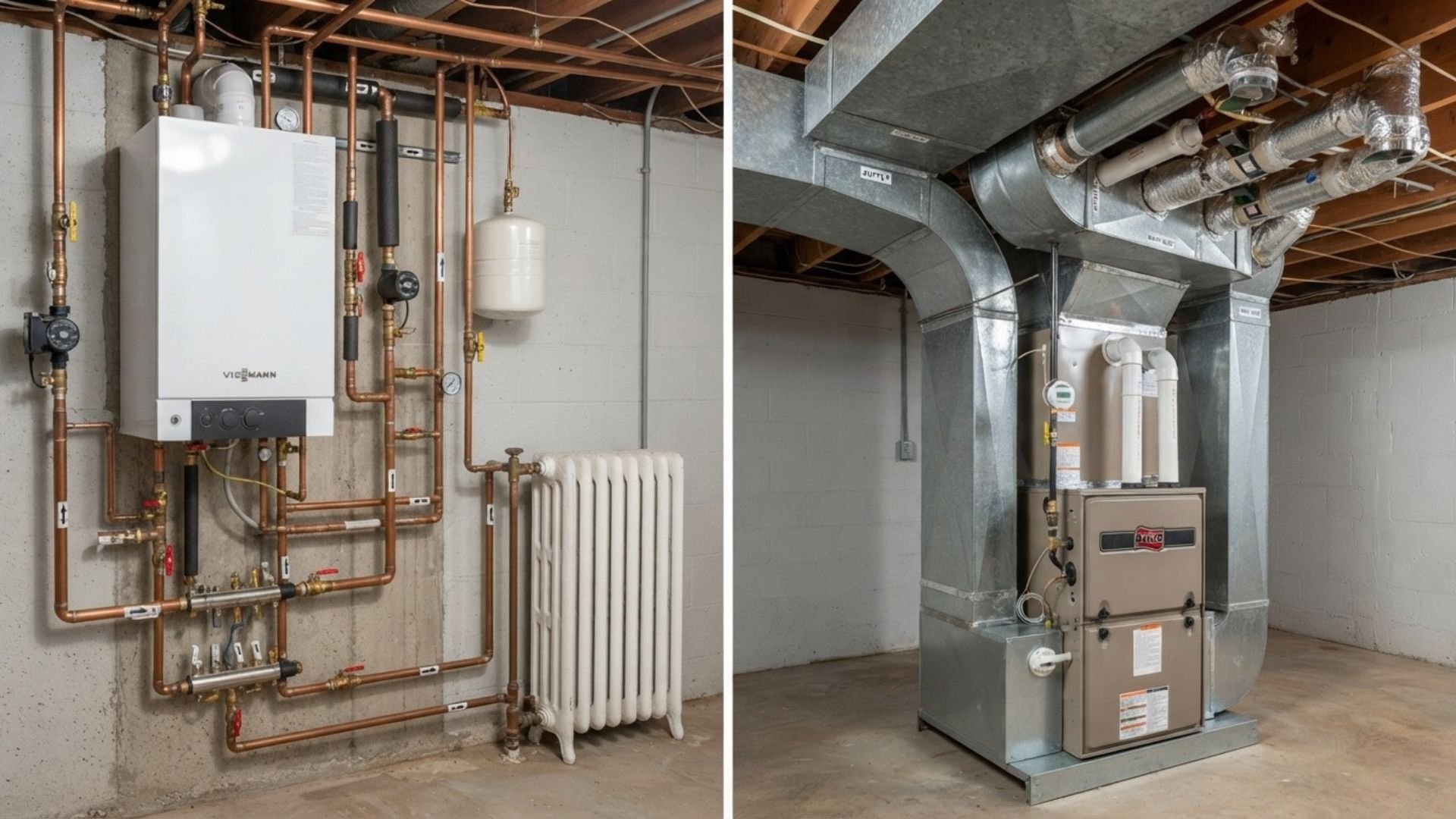
If you're buying a home, or you've just moved to the area and someone mentioned septic tanks, it's worth understanding how sewer and septic differ across Palm Beach County, and specifically within Boca Raton. The short version: many Boca Raton properties are on municipal sewer, but not every property is, and knowing which system a specific property has matters for how you maintain it going forward, well before any problem shows up.
How the two systems actually differ
Municipal sewer connects your home's wastewater line to a shared system that carries everything to a centralized treatment facility, maintained by the city or county utility. You pay a sewer fee, typically alongside your water bill, and beyond your own household plumbing, you're not responsible for maintaining the infrastructure that treats the waste.
Septic is entirely different: it's a self-contained system on your own property, a tank that separates solids from liquids, and a drain field that disperses treated wastewater into the surrounding soil. There's no monthly sewer fee, but you're fully responsible for the system's maintenance, including periodic pumping.
How to tell which system a property uses
The most reliable way to know is to check the specific property rather than assume. A sewer charge on the water bill points to municipal sewer service, and the county health department can tell you whether a septic permit exists for the address. If you're buying a property and the paper trail is unclear, confirm the system before closing rather than after.
What to check before you assume either system
- • Check your water bill. The City of Boca Raton lists a sewer charge among its fixed bill components, so a sewer line item points to city sewer service.
- • Look for a septic tank access lid or drain field area in your yard, usually a rectangular section with slightly different grass growth.
- • Contact the Florida Department of Health in Palm Beach County's Waste Water Control Program at 561-837-5900 and ask about septic records for the address.
- • Check your property's title or closing documents from when you purchased, which sometimes note the system type.
What each system means for ongoing maintenance
Sewer-connected properties still need normal plumbing maintenance, but the wastewater treatment itself isn't your responsibility once it leaves your property line. Septic properties need active maintenance beyond typical household plumbing. That includes regular pumping every 3-5 years and periodic drain field inspection to catch early signs of saturation before a full failure. A septic system is also more sensitive to certain chemicals and non-biodegradable materials going down the drain than a municipal sewer system is.
Neglecting septic maintenance has real consequences beyond a plumbing inconvenience: a failed drain field is a genuinely expensive repair, and continued neglect can create actual health and environmental concerns from untreated wastewater reaching groundwater or the surface.
What if you just bought a home and aren't sure?
This is more common than people expect, especially for buyers relocating from an area where septic is rare or nonexistent. If your closing documents didn't clearly specify, or you inherited the property without a clear paper trail, treating an unknown system as septic until confirmed otherwise is the safer default, since assuming sewer when you're actually on septic means skipping maintenance a system genuinely needs. A quick call with your address is worth doing early rather than waiting for a problem to force the question.
Selling a home with septic: what buyers will ask
If you're selling a septic property, expect buyers or their inspectors to ask about pumping history, drain field condition, and system age. Keeping documentation of past pumping dates and any repairs makes this conversation far smoother than having no records at all. Some buyers, particularly those unfamiliar with septic systems, may also request a septic-specific inspection as part of their due diligence, which is a reasonable request given the system represents a genuine ongoing responsibility they're taking on.
A note on hybrid situations
Occasionally a property has a more complicated setup than a clean sewer-or-septic split, an older property that was originally on septic and later connected to sewer without the septic tank being properly decommissioned, for instance. An improperly abandoned septic tank can pose its own risks, including ground settling over an empty tank if it wasn't filled in correctly. If you suspect this might be your situation, based on an unusually old property history or conflicting information from different sources, it's worth having a professional confirm the actual current setup rather than assuming either system in isolation tells the whole story.
The regulatory difference worth knowing
Plumbing that ties into a municipal sewer is handled through the local building department and utility. Florida plumbing rules are based on the International Plumbing Code (IPC). Septic systems, by contrast, are regulated separately by the Florida Department of Health, which handles septic permitting for Palm Beach County. This is a genuinely different regulatory path, which is part of why a plumber addressing a sewer line issue and someone servicing a septic system are often, though not always, working within different specialized knowledge areas.
Not sure which applies to your property?
If you're on municipal sewer and dealing with a backup or slow drains, sewer line repair and camera inspection are the relevant services. If you've confirmed you're on septic, our septic tank pumping page covers what regular maintenance actually involves.
Whichever system you have, we're happy to help you confirm it if you're genuinely unsure, since giving advice based on the wrong assumption helps nobody.
Septic records sit with the county health office
In Palm Beach County, septic systems are overseen by the Florida Department of Health's Waste Water Control Program, reachable at 561-837-5900. The department's page says that under a state law effective July 1, 2022, owners or contractors with owner authorization can choose a private provider for septic inspections.
Operating permits apply to certain system types, including aerobic treatment units, performance based treatment systems and commercial septic systems. If your water bill shows a sewer charge you are probably on city sewer, and Utility Services at 561-338-7300 can confirm it for your address.
Our crews also serve Deerfield Beach and Coconut Creek, so help is close when you need it.
One local question
Check the water bill for a sewer charge, since the City of Boca Raton lists one among its bill components. Then call the Florida Department of Health in Palm Beach County's Waste Water Control Program at 561-837-5900 and ask about septic records for the address.