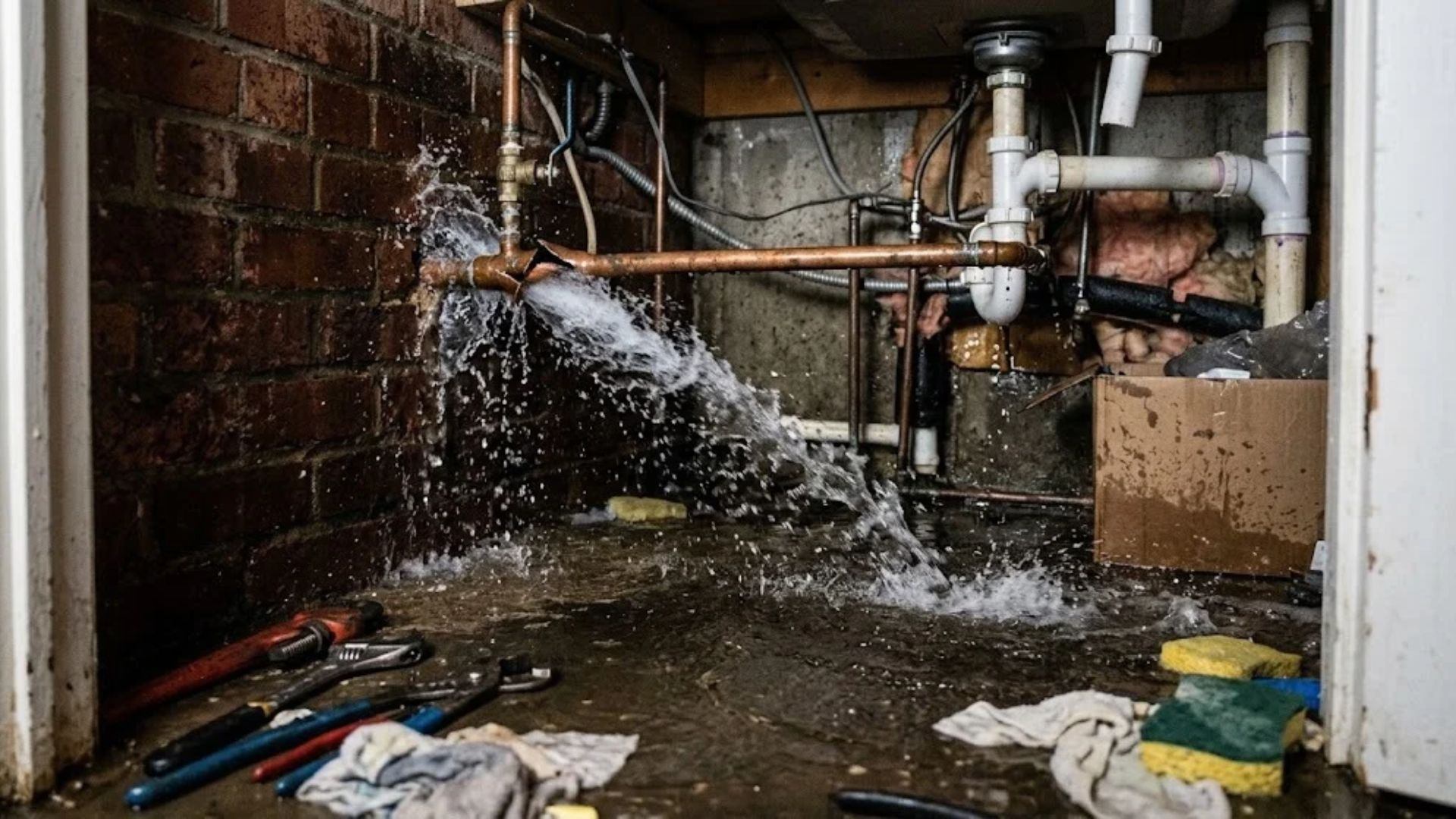
Water is spreading across your floor, or worse, coming through a ceiling, and the plumber is still ten or fifteen minutes out. What you do in that window matters more than most people realize, and a few of the instincts people have in the moment actually make things worse rather than better.
Shut off the water first, always
This is the single most important thing to do, and it should happen before anything else, including grabbing towels or calling anyone. Every second the water keeps running is more damage. If you know where your main shutoff valve is, whether that's near the water meter at the street or inside a utility closet or garage for many Boca Raton homes and condos, use it now. If you don't know where it is, this is exactly why it's worth locating it today, before an emergency, not during one.
For a burst pipe affecting only one fixture or area, there may also be a local shutoff valve specific to that line, but when in doubt, the main shutoff is the safer bet since it guarantees the water stops regardless of which line actually failed.
Cut power to the affected area if there's any doubt
- • If water is anywhere near outlets, switches, or electrical fixtures, shut off power to that area at the breaker panel.
- • Never step into standing water near an active electrical outlet or appliance until power is confirmed off.
- • If you're not confident which breaker controls the affected area, shutting off the main breaker is safer than guessing.
This step gets skipped more often than it should, usually because people are focused entirely on the water itself. But electrical hazards in standing water are a real and serious risk, and it takes only a few seconds to eliminate. If you are unsure about a circuit near standing water, stay out and ask a licensed electrician, who works under the National Electrical Code (NEC).
Move what you can, but don't put yourself at risk doing it
Electronics, furniture, rugs, and anything irreplaceable are worth moving away from the water if it's safe and quick to do. This isn't about a full cleanup effort, it's about limiting additional losses in the few minutes before help arrives. If moving something means stepping into standing water near electrical hazards, or lifting something heavy in a way that risks injury, leave it. A damaged item is recoverable in a way that a fall or electrical shock isn't.
Document before you clean
If there's time and it's safe to do so, photograph the damage before any cleanup starts, standing water, affected flooring, damaged belongings, the visible break if you can see it. This matters more than people expect once an insurance claim is involved, since an adjuster working from photos taken in the moment has a much clearer picture than one working from a verbal description given days later after everything's already dried or been removed.
Note the approximate time you noticed the leak too. Insurance claims for sudden water damage often hinge on establishing that the event was sudden and accidental rather than a slow, long-term issue, and a documented timeline helps support that.
What not to do
Don't try to patch the pipe yourself with tape or a clamp unless you genuinely know what you're doing and have the right materials on hand. A poor patch job can fail under pressure and make the mess worse right as you think you've solved it. Don't turn the water back on to "test" whether it's fixed once you've shut it off, wait for a professional to confirm the repair. And don't assume a small trickle after shutoff means the valve failed, sometimes residual water in the lines takes a minute to fully drain even after the main is off.
Why the next 24-48 hours matter almost as much as the first ten minutes
In South Florida's humidity, mold risk starts within 24-48 hours of water exposure, sometimes faster in an enclosed space with poor airflow. Once the immediate emergency is handled and the pipe itself is repaired, don't treat the situation as fully resolved just because the water is off and the leak is fixed. Standing water and saturated materials, drywall, carpet padding, subflooring, need proper extraction and drying, which is a distinct process from the plumbing repair itself.
A common mistake is running a household fan or two and assuming that's enough. Consumer fans move air across a surface, but they don't pull moisture out of saturated materials the way commercial-grade air movers and dehumidifiers do. A drywall panel that looks dry to the touch after a day with a box fan running can still be holding enough moisture inside the wall cavity to support mold growth weeks later.
What condo and townhome residents should know
If you're in a condo or townhome and a burst pipe involves a shared wall or a line serving multiple units, notify your HOA or property manager alongside calling a plumber. A leak that originates in your unit but affects a neighboring one, or one that turns out to be a shared riser issue rather than something isolated to your unit, has a different liability and coordination picture than a straightforward single-family home emergency. Getting the building involved early tends to go more smoothly than trying to sort out responsibility after the fact.
When every minute counts
If you're dealing with this right now, our burst pipe repair team runs 24/7 dispatch specifically because these situations don't wait for business hours. If water has already spread into flooring or drywall by the time help arrives, water mitigation is the emergency extraction and containment step that follows immediately after the pipe itself is stopped. This is a call we get across the whole service area, but especially from Deerfield Beach's canal-front properties where aging supply lines see faster wear.
Whatever the situation, the fastest path to a good outcome is the same: shut off the water, cut power if there's any doubt, protect what you safely can, and get a technician on the way. Everything else can wait until help arrives.
Who handles which leak in Boca Raton
If you cannot tell which side of the meter the water is coming from, the City of Boca Raton lists a main water line break among the emergencies handled by its Utility Services Department. The city gives 561-338-7339, or 561-338-7325 after 5 p.m. for water or sewer emergencies that are not billing questions. Call that line while you shut off your own main valve, then call us for anything on your side of the property.
Condo and townhome owners have one more call to make. Under Florida Statute 718.113(1), the association is responsible for maintaining the common elements, except limited common elements the declaration assigns to the unit owner. Your declaration decides which pipes fall on which side, so contact your management office as soon as the water is off.
Our crews also serve Highland Beach and Deerfield Beach, so help is close when you need it.
One local question
It depends on your declaration. Florida Statute 718.113(1) makes the association responsible for maintaining the common elements, except limited common elements assigned to the unit owner, so call your management office right after you shut off the water. Then call us at (561) 448-8545 for the repair on your side.